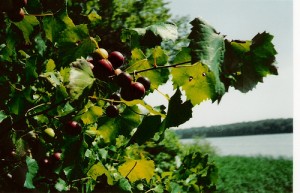
As Pagans, we tend to be a little more aware of the cycles of nature and the turning of the seasons. As a home beer/winemaker, this is especially evident in the cycle of fruits that are available for winemaking each Spring, Summer, and Fall. However, in the South, there is no wine fruit so revered as the local muscadines and scuppernongs that begin ripening towards the end of August. These indigenous wild grapes are grown by farmers, but they are also found by roadsides, behind strip malls, and in the middle of nowhere. The large (usually around 1″ diameter) grapes are sweet and juicy, though they’re not great for eating. In fact, the texture is that of a snot and seed filled, tough leather sack. But when you crush and juice them, that’s when the magick happens.
Fermenting is one of the loveliest forms of transformation. From the sweet, snotty muscadine, we get a rich, delicious, and slightly sweet wine. The scuppernong gives us the same thing, but in a lovely golden to bronze color. It’s not a dry wine at all. It maintains its fresh fruitiness, and a lot of people sweeten it after fermentation to use it as a dessert wine. I like mine just slightly sweet, and tend to let the natural flavor come though without any additional sugar at the end. Here’s a recipe I’ve been using for around 20 years now.
Muscadine Wine
6 lbs ripe muscadine or scuppernong grapes
2 1/4 lbs sugar (we use pure, unrefined cane sugar)
3 qts water
1 tsp pectic enzyme
1 tsp yeast nutrient
1 crushed campden tablet
1 packet wine yeast (preferably Montrachet or Premier Cuvee)
Wash and remove stems from grapes, then crush. Do NOT use a food processor or blender, as this will crack the seeds and introduce bitter tannins into your wine. Make sure your primary fermentation container is completely sterilized. (I use a food-grade plastic bucket for the first stage.)
Add grapes, water, sugar, pectic enzyme, and campden to grapes and stir. Leave for 24 hours, then add yeast nutrient and yeast. You can test the specific gravity around this time, using a hydrometer. It should be around 1.090.
Seal fermenting vessel with an airlock, and roll around to mix pulp and other ingredients once or twice a day.
After a week-10 days, strain grape pulp and squeeze bag thoroughly to remove all juice. Move to a sterile glass carboy.
After a month, transfer wine carefully by syphoning clear wine off of the sediment into another sterile glass carboy.
Do the same a month later. (You’re removing sediment at this point and allowing the wine to clear.)
After another month, check the specific gravity and taste a sample of the wine. If you would like to sweeten it back, add 1/4 tsp per gallon of potassium sorbate. Wait a day, and then add sweetener to taste.
Bottle in clean, sterilized glass bottles with a corker and sterilized corks.
This wine is good right away, though I always try to keep some aside to “find” a few years later.
Enjoy this taste of the harvest, and share with friends at Yule! 🙂
Yay for home-brewing! Here, on a chilly hilltop in the Pacific Nor’west, grapes are a bit iffy. But what we make is mead — the best meads of the house here are not only made from marvelous raw honey, but infused with flower nectar from various blossoms in our garden. We make a honeysuckle mead that delights, and an andromeda mead that makes your fingertips tingle. Later in summer, rose petal mead is made every few years, and soon we will have enough fall-blooming heather to make a fall instead of spring heather mead!
We love making mead too! For our wedding, we made orange blossom mead with organic orange extract and cocoa nibs, sourwood honey with organic vanilla beans and rose water, and a maple syrup/honey mead that was to die for. 🙂
My son is frustrated…he plans to marry next summer and has been working on a champagne mead. It is unpredictable — one bottle with have the bubbles, and the one right next to it will be still as spring water. I bet that orange blossom and cocoa nibs one was killer delicious!
One of the unusual ones we liked had rhodiola and rose hips. We never could get that one clear though..no matter what. We think something in the rhodiola kept it roiled. We based it on a old recipe for “Warriors Mead”….so we called our cloudy but great tasting version “Fog of War” mead.
Yay for home-brewing! Here, on a chilly hilltop in the Pacific Nor’west, grapes are a bit iffy. But what we make is mead — the best meads of the house here are not only made from marvelous raw honey, but infused with flower nectar from various blossoms in our garden. We make a honeysuckle mead that delights, and an andromeda mead that makes your fingertips tingle. Later in summer, rose petal mead is made every few years, and soon we will have enough fall-blooming heather to make a fall instead of spring heather mead!
We love making mead too! For our wedding, we made orange blossom mead with organic orange extract and cocoa nibs, sourwood honey with organic vanilla beans and rose water, and a maple syrup/honey mead that was to die for. 🙂
My son is frustrated…he plans to marry next summer and has been working on a champagne mead. It is unpredictable — one bottle with have the bubbles, and the one right next to it will be still as spring water. I bet that orange blossom and cocoa nibs one was killer delicious!
One of the unusual ones we liked had rhodiola and rose hips. We never could get that one clear though..no matter what. We think something in the rhodiola kept it roiled. We based it on a old recipe for “Warriors Mead”….so we called our cloudy but great tasting version “Fog of War” mead.